
Round, Oval or Square? Choosing the Right Cabin Shape for Your Custom Home Lift

A home lift is increasingly becoming an important part of modern residential architecture. Beyond providing convenient movement between floors, a well-designed lift can complement the appearance, accessibility and functionality of a home.

One of the key design decisions homeowners face is the shape of the lift cabin.

Should you choose a square cabin, a round cabin or an oval design?

There is no one-size-fits-all answer. The ideal cabin shape depends on the available space, home architecture, passenger requirements, installation conditions and the overall design you want to achieve.

For homeowners looking for a lift for home in chennai, understanding these differences can make it easier to select a solution that combines practicality with sophisticated design.

Why Cabin Shape Matters in a Home Lift

The cabin is the part of the lift that passengers see and use every day. Its shape can influence the interior appearance, usable space and how naturally the lift integrates with the surrounding architecture.

A square cabin offers clean lines and a practical layout. A round cabin creates a distinctive architectural statement, while an oval cabin introduces softer curves with an elongated profile.

However, appearance should only be one part of the decision.

Homeowners should also evaluate:

  • Available installation space
  • Passenger capacity
  • Door configuration
  • Number of floors
  • Accessibility requirements
  • Interior design
  • Safety features
  • Maintenance requirements
  • Long-term service support

When these factors are considered together, it becomes easier to identify the cabin configuration that suits the property.

Square Cabin: Practical, Clean and Versatile

Square and rectangular cabins remain a popular choice for residential applications because of their straightforward geometry.

The clean lines can complement contemporary homes, while the layout can provide efficient use of the available cabin area. Square designs can also work well with a wide range of interior styles.

A homeowner can customise the cabin with different finishes, lighting, flooring and control-panel designs to create a look that matches the rest of the property.

Advantages of a square cabin include:

  • Practical and versatile design
  • Efficient use of available space
  • Clean architectural appearance
  • Easy integration with modern interiors
  • Flexible interior customisation

A square cabin can be particularly suitable for homeowners who want the lift to blend seamlessly into the home’s architecture rather than become a dominant visual feature.

Round Cabin: A Distinctive Architectural Feature

A round cabin offers a very different aesthetic.

Curved walls can give the lift a premium, contemporary appearance and make it an architectural feature within the home. This can be especially attractive in modern villas and residences where curved design elements are already part of the architecture.

A round cabin can complement curved staircases, circular architectural details and expansive glass features.

Why consider a round cabin?

  • Distinctive visual appearance
  • Smooth, curved design
  • Strong architectural character
  • Suitable for contemporary residences
  • Potential to create a luxury design statement

At the same time, curved cabins require careful planning. The available footprint, structural conditions and access requirements should be assessed before selecting this configuration.

The most attractive design is only successful when it works practically within the property.

Oval Cabin: Elegant Curves With a Contemporary Profile

An oval cabin offers another option for homeowners who want something different from a conventional square cabin.

Its curved ends and elongated profile can create an elegant appearance while introducing softer visual lines into the home.

Oval designs can work particularly well with residences featuring curved staircases, arches, rounded furniture or flowing architectural elements.

Benefits of an oval cabin may include:

  • Elegant and contemporary appearance
  • Softer visual profile
  • Distinctive alternative to a square cabin
  • Suitable for creative interior concepts
  • Ability to complement curved architecture

As with any custom home lift, the actual feasibility of an oval cabin depends on the selected lift system and the property’s available space.

Which Cabin Shape Is Best for a Compact Home?

For compact homes, space planning becomes especially important.

Instead of considering only the cabin dimensions, homeowners should evaluate the complete installation footprint. This includes the space required for the lift structure, doors, access and other technical requirements.

A professional assessment can help determine whether a particular cabin shape is practical for the property.

Consider questions such as:

How many passengers will use the lift?

How frequently will it be used?

Where should the lift be positioned?

How many floors need to be connected?

What type of access will users require?

What architectural changes, if any, are necessary?

The answers can help narrow down the most suitable configuration.

Designing the Cabin Around Your Home

A custom home lift should feel like part of the residence.

For example, a square cabin can complement homes with straight architectural lines and minimalist interiors. A round cabin can echo curved staircases and contemporary architectural elements. An oval cabin can provide a softer transition between geometric and curved design features.

Cabin finishes can further enhance this integration.

Depending on the selected solution, homeowners may consider combinations of glass, stainless steel, wood-inspired finishes, contemporary lighting and premium flooring.

The objective is to create a cabin that delivers everyday functionality while complementing the home’s overall character.

Safety and Reliability Should Come First

While cabin shape and aesthetics are important, safety and reliability should remain the primary considerations when choosing a residential lift.

Homeowners should evaluate the lift’s safety systems, door mechanisms, emergency provisions, controls and overall engineering.

After-sales service is equally important. A home lift is a long-term investment, and regular maintenance can help ensure reliable operation over time.

When evaluating a lift for home in chennai, look beyond the cabin design and consider the complete solution, from installation and safety to maintenance and service support.

How to Choose Between Round, Oval and Square

The simplest way to approach the decision is to identify your priorities.

Choose square if: you prefer a practical, versatile cabin with clean lines and efficient space planning.

Choose round if: you want the lift to become a distinctive architectural feature with a strong visual presence.

Choose oval if: you want elegant curves and a unique cabin profile that sits between conventional and fully circular designs.

Ultimately, the right cabin shape is the one that works with your home rather than against it.

Why Professional Planning Matters

Every property is different.

New construction projects may provide greater flexibility because the lift can be incorporated into the architectural plan from the beginning. Existing homes require more careful evaluation of available space, access and structural conditions.

Professional consultation can help homeowners understand what is technically feasible before committing to a particular cabin design.

It can also help balance design preferences with practical considerations such as capacity, installation requirements and long-term maintenance.

For homeowners exploring customised residential lift solutions in Chennai, working with an experienced provider can make the planning process significantly more straightforward.

Final Thoughts

Round, oval and square cabin designs each offer their own advantages.

Square cabins provide practicality and versatility. Round cabins can create a bold architectural statement, while oval cabins offer elegant curves and a distinctive contemporary appearance.

The best choice depends on your home’s architecture, available space, passenger requirements and personal design preferences.

A well-planned home lift should not simply provide vertical transportation. It should enhance everyday convenience, accessibility and the overall experience of living in the home.

If you’re planning a custom residential lift, explore the possibilities with SmartG Lifts and find a solution designed around your property’s requirements in Chennai.

Frequently Asked Questions

1. Which cabin shape is best for a residential lift?

There is no universal best shape. Square cabins can offer practical space utilisation, while round and oval cabins can provide distinctive architectural aesthetics. The ideal option depends on the property’s layout and the homeowner’s requirements.

2. Can a home lift cabin be customised?

Depending on the lift system, homeowners may have options for cabin shape, finishes, lighting, flooring, controls and other design elements. A professional assessment can help identify suitable customisation options.

3. What should I consider before choosing a cabin shape?

Consider available space, passenger capacity, door configuration, accessibility, safety, installation requirements, interior design and long-term maintenance support before making a decision.

Choose a Home Lift Designed for Your Space

Whether you prefer the clean geometry of a square cabin, the distinctive appearance of a round cabin or the elegant curves of an oval design, your home lift should be planned around the way you live.

Talk to SmartG Lifts about customised residential lift solutions and take the next step towards comfortable, reliable vertical mobility in Chennai.

Read More

Think You Know Your Home Lift Cost? Here’s What Could Add to the Bill

Installing a home lift is a significant investment, and homeowners naturally want to know exactly how much their project will cost. However, the initial quotation is not always the same as the final project cost.

Unexpected civil work, electrical modifications, customised interiors, additional safety requirements, site limitations, and last-minute changes can all increase the overall installation budget.

Understanding these potential costs before the project begins can help homeowners plan more accurately and avoid unpleasant financial surprises.

If you are researching home lifts chennai, it is important to look beyond the initial equipment price and understand the complete installation scope.

What Causes Home Lift Installation Costs to Increase?

A home lift installation involves more than supplying and installing the lift equipment. Every property has different structural, electrical, architectural, and access conditions.

A professional site assessment helps identify these requirements before installation begins. Without proper planning, additional work may only become apparent once the project is underway.

Here are some of the most common reasons a home lift installation can go over budget.

1. Civil and Structural Work

Civil work is one of the most important costs to clarify before starting a home lift project.

Depending on the building and selected lift configuration, the installation may require:

  • Lift shaft construction
  • Pit or pit-related modifications
  • Slab openings
  • Structural reinforcement
  • Wall modifications
  • Flooring and finishing work

Not every quotation includes these requirements. Some proposals cover the lift equipment and installation while treating civil work as a separate responsibility.

Before accepting a quotation, homeowners should confirm exactly what civil work is included and what is excluded.

2. Electrical Modifications

A lift requires a suitable electrical supply and appropriate protection systems. Existing electrical infrastructure may need modification depending on the property.

Potential requirements can include additional wiring, dedicated circuits, earthing, protection equipment, or other electrical work.

These requirements are easier and often more cost-effective to address when identified during the planning stage rather than after installation has started.

3. Cabin, Door and Interior Customisation

A standard lift configuration may not always match the architectural style of a home.

Homeowners may select customised cabin finishes, flooring, lighting, ceilings, handrails, doors, glass elements, or other interior options.

While these upgrades can improve the appearance of the lift, they can also increase the project cost.

The best approach is to finalise the preferred specifications before the quotation is approved so that the budget reflects the actual design.

4. Safety and Convenience Features

Safety should always remain a priority when selecting a residential lift.

Depending on the model and configuration, homeowners may require or prefer features such as emergency communication systems, alarms, sensors, backup arrangements, automatic rescue functions, and other safety or convenience features.

The important point is to understand which features are part of the standard specification and which are optional.

A detailed quotation should clearly identify these items rather than leaving them open to interpretation.

5. Site-Specific Installation Challenges

No two homes are exactly alike.

Restricted access, limited installation space, unusual floor layouts, existing structures, and difficult equipment movement can make an installation more complex.

For example, transporting lift components into a property may require additional planning when access is restricted.

For homeowners planning home lifts in Chennai, a detailed site inspection is therefore an important part of accurate budgeting.

6. Changes After Work Begins

Last-minute changes are another common cause of cost overruns.

Changing the lift location, modifying shaft dimensions, altering door configurations, upgrading materials, or changing cabin specifications after civil work has started can require additional labour and materials.

This is why the lift design should be coordinated with the building plan as early as possible.

Finalising the technical and aesthetic requirements before construction begins can significantly reduce the possibility of costly changes later.

7. Charges That Are Not Clearly Defined

Some budget surprises happen because homeowners assume that a particular service is included when it is actually excluded.

Before signing a quotation, clarify whether the price includes:

  • Equipment
  • Installation
  • Civil work
  • Electrical work
  • Transportation
  • Material handling
  • Testing and commissioning
  • Finishing work
  • Taxes and applicable charges
  • Warranty
  • After-sales service

A transparent quotation should also clearly state exclusions.

This makes it much easier to understand the actual financial commitment before the project begins.

How Can Homeowners Avoid Hidden Lift Installation Costs?

The best way to prevent cost overruns is to plan the complete project rather than focusing only on the lift’s initial price.

Start with a professional site assessment. Discuss the property layout, number of floors, available space, electrical infrastructure, preferred lift configuration, cabin design, and expected usage.

Then request a detailed quotation that separates the major components of the project.

When comparing multiple providers, make sure the quotations are based on comparable specifications. A lower price may simply indicate that certain work or features have not been included.

For homeowners evaluating home lifts in Chennai, comparing the total installation scope rather than the headline price can provide a much more accurate picture of the investment.

Why the Lowest Quotation May Not Be the Lowest Final Cost

It is natural to compare prices when selecting a home lift. However, focusing only on the lowest initial quotation can sometimes create problems later.

Consider two quotations.

One may have a lower equipment price but exclude civil work, electrical modifications, selected safety features, or finishing.

Another may appear more expensive initially but include a wider installation scope.

The second option could ultimately require less additional spending.

The right question is therefore not simply:

“Which lift has the lowest price?”

Instead, ask:

“Which quotation gives me the clearest and most complete picture of the finished installation?”

This approach makes budgeting more predictable and helps homeowners make a decision based on value rather than price alone.

A Practical Checklist Before Approving Your Lift

Before finalising your home lift installation, make sure you have confirmed:

✔ Site inspection and technical assessment
✔ Lift specifications and capacity
✔ Number of stops and floors
✔ Shaft or structural requirements
✔ Electrical requirements
✔ Cabin and door finishes
✔ Safety features
✔ Transportation and installation scope
✔ Testing and commissioning
✔ Warranty terms
✔ Service and maintenance support
✔ All inclusions and exclusions

A clear understanding of these details can significantly reduce the risk of unexpected costs.

Choose Transparency From the Beginning

A well-planned home lift project should not leave homeowners guessing about what they will have to pay later.

At SmartG Lifts, the planning process should begin with understanding the property, identifying installation requirements, and selecting a lift configuration that suits the home’s needs.

Whether you are building a new property or upgrading an existing residence, careful planning can help you control the project budget while achieving the accessibility and convenience you expect from a modern residential lift.

Explore SmartG Lifts to learn more about residential lift solutions and discuss your requirements with the team.

Frequently Asked Questions

1. Why can the final home lift installation cost be higher than the quotation?

The final cost can increase when civil work, electrical modifications, customisation, additional safety features, transportation, or site-specific requirements are not included in the initial quotation.

2. How can I avoid hidden costs when installing a home lift?

Arrange a detailed site assessment, request an itemised quotation, confirm all inclusions and exclusions, and finalise the lift specifications before installation or related construction work begins.

3. What should I compare when choosing between home lift quotations?

Compare the complete scope of work, equipment specifications, civil and electrical requirements, safety features, installation services, warranty, after-sales support, and exclusions—not just the initial price.

Plan Your Home Lift Installation With Confidence

A home lift should be planned as a complete project, not simply purchased as a piece of equipment. By identifying potential costs early and choosing a transparent installation approach, homeowners can reduce the risk of budget overruns and enjoy a smoother installation experience.

If you are planning a home lift and want to understand the requirements for your property, contact SmartG Lifts for professional guidance and a properly planned residential lift solution in Chennai.

Read More


home lifts chennai
home lifts chennai


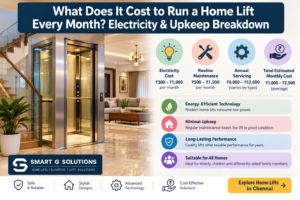
Installing a home lift is becoming a practical choice for homeowners who want easier access between floors, improved convenience, and better long-term accessibility. But while considering installation, one question often comes up: what does it actually cost to run a home lift every month?

The overall running cost is not limited to electricity. Homeowners should also consider regular maintenance, annual servicing, spare parts, and occasional repairs. Understanding these expenses beforehand makes it easier to plan a realistic budget.

For people researching home lifts chennai, the important point is to look at the total cost of ownership rather than focusing only on the initial installation price.

How Much Electricity Does a Home Lift Use? ⚡

A home lift does not consume electricity continuously like an air conditioner or refrigerator. Power is mainly required when the lift is moving, while some models may use a small amount of standby electricity for controls, lighting, displays, and safety systems.

The actual electricity consumption depends on several factors:

  • Number of trips per day
  • Number of floors
  • Lift capacity
  • Motor technology
  • Travel distance
  • Standby power consumption
  • Local electricity tariff

A small residential lift used by a family a few times each day may have a relatively manageable electricity expense. However, a larger household with frequent trips between multiple floors will naturally consume more power.

Therefore, homeowners should ask the manufacturer for an estimated monthly electricity consumption based on their expected usage instead of relying on a general figure.

What About Home Lift Maintenance? 🔧

Electricity is only one part of the running cost. Regular maintenance is equally important.

A home lift contains electrical, mechanical, safety, and control components. Periodic inspection helps identify issues before they become major problems.

Maintenance may include checking:

  • Lift doors and door sensors
  • Motor and drive system
  • Control panel
  • Safety mechanisms
  • Cables or other lifting components
  • Cabin operation
  • Emergency systems
  • Electrical connections

The cost depends on the lift model, service agreement, technology, and maintenance provider.

Some manufacturers offer annual maintenance contracts, while others provide different service packages depending on the requirements of the homeowner.

When comparing home lifts in Chennai, it is therefore useful to ask for both the installation quotation and the expected annual maintenance cost.

Annual Servicing and Repairs 📅

Even when a lift is properly maintained, some components may eventually require replacement.

Wear and tear can affect parts such as door components, sensors, switches, electrical components, and other mechanical systems. The replacement cost depends on the specific component and lift design.

This is why homeowners should not calculate their budget based only on monthly electricity consumption.

A better approach is to create an annual ownership budget that includes:

Electricity + routine maintenance + annual servicing + potential repairs

For example, if annual maintenance costs ₹6,000, the maintenance component alone averages ₹500 per month when spread across the year. Electricity would then be added according to actual household usage.

These are planning examples rather than fixed industry prices because every installation is different.

Does Frequent Usage Increase the Running Cost? 🏠

Yes. More frequent usage can increase electricity consumption and the number of operating cycles for components such as doors and mechanical systems.

However, homeowners should not avoid using their lift simply to reduce electricity expenses. A residential lift is installed to provide convenience and accessibility.

The better strategy is to select a lift that matches the household’s actual requirements.

For example, a four-member family living in a two- or three-storey home may have different requirements from a large family using the lift throughout the day.

Correct sizing can help avoid unnecessary capacity and ensure that the system is suitable for the intended application.

How Can You Reduce Home Lift Running Costs? 💡

There are several practical ways to keep long-term expenses under control.

1. Select the Right Lift Capacity

Choose a lift according to the number of users and expected load. Overspecifying a system may increase the initial investment without providing a meaningful benefit.

2. Compare Energy Consumption

Ask suppliers for estimated electricity consumption and standby power requirements. Different technologies can have different operating characteristics.

3. Follow the Maintenance Schedule

Skipping routine maintenance may save money temporarily but can increase the risk of unexpected breakdowns and expensive repairs.

4. Check the Warranty

Understand exactly what is covered under the manufacturer’s warranty and for how long.

5. Compare Annual Maintenance Contracts

Before purchasing, ask whether preventive maintenance, labour, emergency visits, and spare parts are included in the service package.

6. Use a Reliable Service Provider

Good after-sales support can make a significant difference to the long-term ownership experience.

What Should You Ask Before Buying a Home Lift? 🤔

Before making a purchase, homeowners should request clear answers to the following questions:

  • What is the estimated electricity consumption?
  • How much does annual maintenance cost?
  • What does the warranty cover?
  • How often should the lift be serviced?
  • What happens during a power failure?
  • What safety systems are included?
  • Are emergency service visits available?
  • How much do commonly replaced spare parts cost?
  • What civil or structural work is required?
  • What is the expected service life of the system?

Getting these details in writing makes it easier to compare different options objectively.

Is a Home Lift Expensive to Run? 💰

A home lift should not be evaluated based solely on its electricity bill. For most homeowners, the complete running cost consists of several smaller expenses spread across the year.

Electricity consumption depends heavily on usage, while maintenance and servicing depend on the equipment and service agreement.

For homeowners exploring home lifts in Chennai, comparing the complete lifecycle cost can provide a much clearer picture than comparing installation prices alone.

A reliable residential lift should combine appropriate capacity, safety features, efficient operation, regular maintenance, and dependable after-sales support.

Final Thoughts

The monthly cost of operating a home lift depends on the specific installation and how frequently it is used. Electricity is one component, but maintenance, servicing, repairs, and replacement parts should also be included when calculating the long-term budget.

The smartest approach is to ask the lift provider for a complete cost estimate covering installation, electricity expectations, maintenance, warranty, servicing, and potential replacement costs.

If you are planning a residential lift installation, Smart G Solutions can be explored for home lift solutions and professional guidance based on your home’s requirements.

Choose the right system, maintain it regularly, and consider the total ownership cost—not just the purchase price—when planning your home lift in Chennai.

Frequently Asked Questions

1. How much electricity does a home lift consume every month?

Electricity consumption varies depending on the lift model, motor, number of floors, travel distance, standby consumption, and frequency of use. The manufacturer can provide an estimated consumption based on your expected usage.

2. How often does a home lift need maintenance?

The recommended maintenance schedule depends on the lift model and manufacturer. Regular inspections and servicing help maintain safe and reliable operation.

3. What is the biggest ongoing expense of a home lift?

There is no single fixed expense. Electricity, routine maintenance, annual servicing, and occasional component replacement can all contribute to the total ownership cost.

Read More
lift manufacturers in chennai

Lift Manufacturers in Chennai: When to Add a Lift During Home Renovation

Lift Manufacturers in Chennai: When to Add a Lift During Home Renovation

Home renovation is the perfect opportunity to improve not just the appearance of your property but also its comfort, accessibility, and long-term functionality. While homeowners usually focus on flooring, kitchens, wardrobes, lighting, and paint, one important upgrade often gets overlooked—a residential lift. 🏠✨

If you live in a multi-storey home or are planning to add another floor, a lift can make everyday movement much easier. The key question is not simply whether you need a lift, but when should you include it in your renovation plan?

The best time is usually before major renovation and civil work begins.

Why Consider a Lift During Home Renovation?

Adding a lift involves more than installing a cabin. Depending on the lift design and property, you may need to consider space, floor openings, landing areas, electrical connections, structural requirements, and access between floors.

Planning these elements at the beginning of renovation allows them to become part of the overall house design. This can reduce the possibility of breaking finished flooring, walls, ceilings, or other interiors later.

Homeowners can also discuss their requirements with experienced lift manufacturers in Chennai before finalising the renovation layout.

1. Before Changing Your Floor Plan 📐

A renovation often involves removing walls, changing room layouts, modifying staircases, or extending existing spaces.

If you are considering a lift, this is an ideal stage to identify its location.

The lift could potentially be positioned near the staircase, in a suitable corner, or in another practical area depending on the structure of the property. Planning early gives your architect, contractor, and lift professional an opportunity to coordinate their work.

Instead of trying to fit a lift into an already completed home, you can design the surrounding spaces around it.

2. When Planning a Multi-Storey Home

If your home has two or more floors, think about how your family will use the property over the coming years.

Carrying groceries upstairs, moving furniture, assisting children, or travelling repeatedly between floors can become inconvenient. A residential lift can provide an easier way to move between different levels.

For homeowners planning to stay in their property for many years, this can be particularly useful.

It is also worth considering accessibility for elderly family members or anyone who may have difficulty using stairs regularly. 👨‍👩‍👧‍👦

3. Before Starting Major Civil Work 🔨

One of the biggest mistakes is waiting until the renovation is almost complete before thinking about a lift.

By that stage, flooring may already be installed, walls may be finished, electrical work may be completed, and the interior design may be fixed.

A lift may have specific installation requirements that need to be considered before these works are completed.

Therefore, discuss the possibility of installing a lift before beginning major civil modifications. This allows the contractor and lift team to coordinate requirements from the beginning.

4. Consider Available Space

Not every home has the same amount of available space.

A lift suitable for a large independent house may not be appropriate for a compact property. The number of floors, available installation area, intended capacity, and movement between floors all need to be considered.

This is why a professional site assessment is important.

A qualified lift provider can evaluate the property and explain the available options based on its existing structure and renovation plans.

5. Think About Future Accessibility

A renovation should not only solve today’s problems. It should also make the property convenient for the future. 💡

A home that feels comfortable now may become more challenging to navigate as family requirements change.

A residential lift can support easier movement for older adults and make carrying items between floors more convenient. It can also improve accessibility without requiring a major lifestyle change.

When selecting a solution, homeowners should consider safety, reliability, maintenance, energy consumption, operating requirements, and long-term service support.

6. Match the Lift With Your Interior Design 🎨

A residential lift does not have to look out of place in a beautifully renovated home.

Modern lift solutions can be designed with different finishes, doors, lighting, controls, and cabin styles. These elements can be coordinated with the home’s overall interior theme.

For example, a contemporary home may benefit from a minimalist lift design, while a premium residence may use finishes that complement existing flooring, walls, and furniture.

Discussing the visual design early can help ensure the lift becomes part of the home rather than appearing as an afterthought.

What Should You Check Before Choosing a Lift?

Before selecting a residential lift, create a simple checklist:

  • Number of floors to be connected
  • Available installation space
  • Required load capacity
  • Expected frequency of use
  • Safety features
  • Electrical requirements
  • Installation process
  • Maintenance requirements
  • Warranty and service support
  • Overall project budget

You should also compare different manufacturers rather than selecting a lift based only on price.

For homeowners researching residential lift solutions in Chennai, SMART G SOLUTIONS provides information about home lift options and related solutions.

Why Professional Planning Matters

Installing a lift is a technical project that needs proper planning and coordination. The structure of every house is different, so there is no single lift solution that works equally well for every property.

Professional guidance can help you understand the practical requirements before making structural decisions.

If you are renovating in Chennai, involving the lift provider during the planning stage can also make coordination between the architect, civil contractor, electrical team, and interior designer easier.

The goal should be to select a solution that fits your property, lifestyle, space, and long-term requirements.

Frequently Asked Questions ❓

1. Is renovation a good time to install a home lift?

Yes. Planning a lift before or during major renovation can make it easier to coordinate structural, electrical, and interior requirements.

2. Can a residential lift be installed in an existing house?

In many cases, yes. The feasibility depends on the building structure, available space, floor configuration, and selected lift system. A professional site assessment is recommended.

3. What should I consider when choosing a home lift?

Consider available space, capacity, number of floors, safety features, installation requirements, maintenance, energy efficiency, warranty, and after-sales service.

Final Thoughts 🏡

A home renovation is about creating a property that works better for your family, not simply making it look newer. If you are renovating a multi-storey home, considering a lift at the planning stage can help you create a more accessible and future-ready living environment.

Don’t wait until your renovation is finished. Evaluate your space, understand your requirements, compare suitable solutions, and plan the lift alongside the rest of your home improvement project.

Planning to add a residential lift in Chennai? Explore SMART G SOLUTIONS at https://smartglifts.com/ and discuss the right solution for your home.

Read More

7 Myths About Home Lifts in Chennai — Busted

Home lifts are becoming an increasingly practical choice for modern multi-storey homes. Yet, many homeowners still hesitate because of common misconceptions about cost, space, safety, installation, and maintenance.

Some of these concerns come from experiences with traditional commercial elevators, while others are simply outdated assumptions.

If you are considering lifts in Chennai for your home, it is worth separating the myths from the facts before making a decision.

Here are seven common misconceptions—and what homeowners should actually know.

Myth 1: Home Lifts Are Only for Luxury Homes

A home lift may look like a premium addition, but its purpose goes beyond luxury.

For families with elderly parents, people with mobility concerns, or households living across multiple floors, a residential lift can provide everyday convenience and easier access.

It can also be useful for carrying groceries, luggage and other heavy items between floors.

The reality: A home lift can be a practical accessibility and convenience solution, not simply a luxury feature.


Myth 2: A Home Lift Needs a Huge Amount of Space

This is one of the most common concerns.

Many homeowners assume that installing a lift requires a large area comparable to a commercial elevator. In reality, residential lift systems are available in different configurations and sizes.

The space required depends on several factors, including:

  • Lift type
  • Cabin capacity
  • Number of floors
  • Available floor area
  • Structural conditions
  • Entry and exit configuration

Some residential solutions can be considered for homes where space is limited.

However, there is no universal solution for every property. A proper site assessment is the best way to determine what is feasible.


Myth 3: Installing a Home Lift Means Major Demolition

Not necessarily.

The amount of civil work depends on the building and the lift system selected. Existing homes may have different installation requirements from new constructions.

Depending on the design, installation could involve provisions for a shaft, landing areas, electrical connections, structural support, or other modifications.

The important thing is to understand the requirements before selecting a model.

A professional assessment can help homeowners understand:

What needs to be modified → Where the lift can be installed → How much space is required → What preparation is necessary

This makes the installation process more predictable.


Myth 4: Home Lifts Are Unsafe During Power Cuts

Power interruptions are a valid concern, particularly when a lift is being considered for elderly family members.

However, modern residential lift systems can incorporate emergency safety features depending on the model and configuration. These may include backup power arrangements, emergency lighting, alarms, communication systems, and controlled emergency operation.

The important point is not to assume that every lift has identical features.

Before purchasing, ask the supplier:

“What happens if there is a power failure while someone is using the lift?”

Understanding the emergency procedure and available safety features should be an essential part of the buying decision.


Myth 5: A Home Lift Will Dramatically Increase My Electricity Bill

A lift does consume electricity, but the actual operating cost depends on factors such as the technology, motor or drive system, capacity, travel distance, and frequency of use.

A residential lift also typically has a very different usage pattern from a commercial elevator operating continuously throughout the day.

Instead of focusing only on the initial purchase price, homeowners should consider the overall cost of ownership.

This includes:

  • Power consumption
  • Maintenance
  • Spare parts
  • Warranty
  • Service requirements

When comparing lifts in Chennai, asking about power requirements and long-term operating costs can give you a much clearer picture.


Myth 6: Home Lifts Don’t Need Maintenance

This one is definitely a myth.

A home lift contains mechanical and electrical components that require periodic inspection and maintenance. Regular servicing helps keep the equipment operating reliably and allows potential issues to be identified earlier.

Before choosing a lift, ask about the available maintenance support.

Important questions include:

  • Is an Annual Maintenance Contract available?
  • What does the warranty cover?
  • How quickly is service provided?
  • Are replacement parts readily available?
  • What preventive maintenance is recommended?

A good installation is important, but dependable after-sales support is equally valuable over the life of the lift.


Myth 7: All Home Lifts Are the Same

Perhaps the biggest mistake is assuming that every residential lift offers the same specifications.

Different systems can vary in:

  • Technology
  • Passenger capacity
  • Cabin dimensions
  • Installation requirements
  • Power consumption
  • Safety features
  • Interior finishes
  • Maintenance requirements

This is why choosing a lift based solely on the lowest quotation can be misleading.

The right choice should balance safety, functionality, space, design, reliability, installation requirements, and long-term support.


So, Are Home Lifts Worth Considering?

For the right property and requirements, a residential lift can be a valuable addition.

It can make a multi-storey home more accessible, convenient, and comfortable while also making the property better suited to changing family needs over time.

The best approach is not to decide based on assumptions.

Instead:

Assess your space.
Understand your requirements.
Compare suitable technologies.
Check safety features.
Understand maintenance and service.
Then make your decision.

At SmartG Lifts, the focus is on helping homeowners understand residential lift options and select solutions suited to their property’s requirements.

Frequently Asked Questions

1. Can a home lift be installed in an existing house?

In many cases, yes. The feasibility depends on the property’s layout, available space, structural conditions, and the type of lift selected. A professional site assessment should be carried out before installation.

2. Are home lifts suitable for elderly family members?

Yes. A residential lift can make movement between floors easier and reduce dependence on stairs. Safety features, ease of operation, and reliable maintenance should be considered when selecting a system.

3. What should I consider before choosing a home lift?

Look at space requirements, capacity, lift technology, safety features, power requirements, installation work, warranty, maintenance, service support, and overall ownership cost.

Make the Right Choice for Your Home

Don’t let common myths prevent you from exploring a solution that could make your home more comfortable and accessible.

If you’re planning a residential lift installation, speak with SmartG Lifts to understand the options available in Chennai.

Read More

Home Lift Interior Design Trends for 2026: Choosing the Right Finish

A home lift is no longer simply a way to move between floors. In premium residences, it is becoming an integral part of the home’s interior architecture—an element that can complement the staircase, flooring, furniture, lighting and overall design language.

As homeowners become more conscious of personalised interiors, the lift cabin is receiving the same attention as other high-end design features. The right combination of materials, textures, lighting and colours can transform a functional cabin into an elegant part of the home.

For homeowners considering premium lifts in Chennai, 2026 brings a strong focus on understated luxury, natural materials, minimalist detailing and finishes that are designed to remain visually appealing over time.

Why Cabin Finishes Matter in Modern Home Lift Design

A lift cabin occupies a relatively compact space, which makes material selection particularly important. A dark, heavily patterned finish can make a small cabin feel enclosed, while lighter materials, glass and carefully positioned lighting can create a greater sense of openness.

The cabin should also complement the architecture around it.

For example, a residence with warm timber flooring may benefit from a wood-inspired cabin, while a contemporary home with glass railings and metallic details may suit a panoramic or brushed-metal finish.

The objective is not to make the lift stand out at any cost. Instead, it should feel like a natural extension of the home’s interior.

1. Warm Wood Finishes for Timeless Luxury 🌳

Wood continues to be one of the most versatile choices for premium residential interiors.

Wood-inspired panels can introduce warmth and texture into a lift cabin while creating a connection with other timber elements in the home. Walnut, oak and teak-inspired finishes can work particularly well with wooden doors, flooring, furniture and staircase components.

For a more contemporary appearance, wood can be combined with brushed stainless steel, dark metal or subtle gold-toned accents.

The result is a cabin that feels warm and sophisticated without appearing overly decorative.

2. Brushed Metal for Contemporary Interiors ✨

Brushed metal finishes offer a clean and architectural appearance.

Stainless steel, satin-finished metal and champagne-toned surfaces can work particularly well in modern and minimalist homes. Their subtle texture provides visual interest without creating the highly reflective appearance associated with polished metal.

Metal can also be introduced selectively through trims, handrails, control panels and door surrounds rather than being used across every surface.

This creates a more balanced and refined cabin design.

3. Panoramic Glass for an Open Experience 🪟

Panoramic glass is one of the most distinctive trends in residential lift design.

Glass can visually connect the cabin with its surroundings and create a greater sense of openness. It can be particularly effective in villas featuring open staircases, double-height spaces, large windows or contemporary architectural elements.

SmartG offers panoramic lift solutions with glass-panelled designs, making this an option for homeowners who want their lift to contribute to the visual character of the property.

However, glass should be selected with more than aesthetics in mind. Privacy, cleaning, lighting, safety and the position of the lift within the home should also be considered.

4. Integrated Lighting as a Design Element 💡

Lighting can completely change the perception of a lift cabin.

Rather than treating lighting as a purely functional requirement, premium interiors can use recessed LEDs, linear lighting and indirect illumination to enhance the cabin’s materials.

Warm lighting can bring out the richness of wood and darker surfaces, while neutral illumination can work well with glass, metallic and lighter finishes.

The aim is to create a comfortable atmosphere while allowing the cabin materials to remain the visual focus.

5. Marble and Stone-Inspired Finishes 🪨

Marble continues to be associated with luxury residential design, and its influence can extend into lift cabins.

Marble-inspired panels and engineered decorative surfaces can provide the visual character of natural stone while offering a practical alternative for interior applications.

Light surfaces with subtle veining can create a bright, spacious appearance. Dark stone-inspired finishes, on the other hand, can introduce a dramatic and sophisticated character.

When paired with simple metallic detailing, these finishes can create a refined, contemporary look.

6. Minimalist Cabin Design

Minimalism is becoming more sophisticated in 2026.

Rather than filling a cabin with multiple decorative materials, premium interiors are increasingly focusing on fewer, better-coordinated elements.

A minimalist lift cabin may feature:

  • Seamless wall panels
  • Neutral colours
  • Subtle textures
  • Integrated lighting
  • Slim metallic accents
  • Discreet control panels

This approach is particularly effective when the surrounding architecture already has a strong visual identity.

7. Natural and Neutral Colour Palettes 🤍

Neutral colours remain a strong choice for long-term residential design.

Warm beige, cream, taupe, soft grey and earthy tones can create a calm and elegant cabin environment. These colours can also be combined easily with wood, glass, metal and stone-inspired surfaces.

For homeowners planning lifts in Chennai, neutral finishes can be particularly useful when the lift needs to work with different interior styles over the years.

A timeless neutral base also allows homeowners to update furniture, wall colours and decorative elements without making the lift appear out of place.

8. Personalisation Is Becoming Essential

One of the most important developments in premium home lift design is customisation.

A lift cabin should reflect the character of the residence rather than looking like a standard installation.

SmartG’s residential lift approach allows homeowners to consider customised solutions that suit their requirements and match the décor of their homes.

This allows design decisions to be made alongside practical considerations such as available space, lift configuration and intended usage.

Choosing a Finish That Will Last

Following design trends can provide inspiration, but a home lift is a long-term investment. The finish should therefore be selected with durability and maintenance in mind.

Before finalising a cabin interior, consider:

  • Ease of cleaning
  • Resistance to scratches
  • Fingerprint visibility
  • Moisture exposure
  • Long-term appearance
  • Maintenance requirements
  • Compatibility with the lift system
  • Relationship with the home’s existing interiors

A luxurious finish is only successful when it continues to look and perform well with regular use.

Designing the Lift as Part of the Home

The most successful residential lift interiors do not feel like separate mechanical spaces. They feel like part of the architecture.

This is why cabin design should ideally be considered during the planning stage rather than after the lift has already been selected.

At SmartG Lifts, residential elevator solutions are designed around different home requirements, with options including automatic, panoramic and standard lifts. The company also highlights customisation to suit the décor and requirements of individual homes.

Whether the preference is warm wood, brushed metal, panoramic glass, marble-inspired surfaces or minimalist detailing, the right combination can create a lift cabin that complements the residence.

Final Thoughts

The home lift of 2026 is about more than convenience. It is an opportunity to combine technology, comfort and interior design in a single architectural feature.

The best cabin finish does not necessarily need to be the most elaborate. It should be carefully selected to complement the home’s architecture, withstand everyday use and remain visually appealing for years.

For homeowners exploring premium lifts in Chennai, choosing the right finish is ultimately about finding the balance between design, durability, functionality and personal style.

A well-designed home lift should not feel like an addition to the house. It should feel as though it was always meant to be there.

Frequently Asked Questions

1. What are the most popular home lift finishes for 2026?

Wood-inspired finishes, brushed metal, panoramic glass, marble-inspired surfaces and minimalist neutral designs are among the strongest choices for contemporary premium residences.

2. How do I choose a lift cabin finish that matches my home?

Consider the home’s flooring, staircase, doors, furniture, wall colours and lighting. The lift does not need to match everything exactly; complementary materials and colours usually create a more sophisticated result.

3. Can SmartG customise a home lift to suit the interior?

SmartG provides residential lift solutions with customisation options intended to suit different home requirements and décor styles. The available configuration and finish options can be evaluated based on the property and lift requirements.

Ready to explore a residential lift designed around your home’s architecture and interior style? Talk to SmartG Lifts about creating a refined home lift experience in Chennai.

Read More

Transforming Your Home with Affordable Elevators

As technology advances, the concept of luxury and convenience in homes is evolving. Home elevators, once a symbol of opulence, are now accessible and affordable for a wide range of homeowners. Whether you’re considering a small lift for your home or exploring more robust options like a hydraulic lift, the market offers a variety of solutions tailored to your needs.

The Rise of Home Elevators

Home elevators have grown in popularity due to their practical benefits and enhanced aesthetic appeal. Beyond the obvious convenience, these lifts add significant value to your property, making them a wise investment. Companies like TKE Elevator are leading the charge in creating modern, sleek designs that integrate seamlessly into any home décor.

Understanding the Cost

One of the most common concerns for homeowners is the cost of installing a home elevator. The price can vary based on several factors, including the type of lift, the size, and the installation process. For instance, a small elevator for a home might cost less than a more complex hydraulic lift. On average, you can expect residential elevator costs to range from $15,000 to $50,000. However, it’s important to remember that the long-term benefits and added home value often justify the initial expense.

Choosing the Right Elevator for Your Home

When selecting a home elevator, consider your specific needs and budget. For smaller homes, a compact lift might be the best option. These lifts are designed to fit into tight spaces without sacrificing functionality. If you’re looking for something more robust, a hydraulic lift provides a smooth and reliable experience, capable of supporting more weight and offering longer service life.

Why Invest in a Home Elevator?

Investing in a home elevator is about more than just convenience; it’s about future-proofing your home. As we age, mobility can become a challenge, and having a domestic lift can make a world of difference. Additionally, home elevators are becoming increasingly affordable, making them an attractive option for homeowners of all ages.

Final Thoughts

Home elevators are no longer just for the wealthy. With advancements in technology and competitive pricing from elevator companies, you can now enjoy the benefits of a home lift without breaking the bank. Whether you’re looking at the cost of a house elevator or exploring different types of lifts for houses, there’s an option out there for every budget and need.

Read More

Elevate Your Lifestyle with a Residential Elevator

In the past, elevators were mostly found in commercial buildings and luxury homes. However, the demand for residential elevators is on the rise, as more homeowners recognize their value. From small lifts for homes to hydraulic systems, the variety of options available today ensures there’s a solution for every household.

The Evolution of Home Lifts

The concept of home elevators has evolved significantly over the years. No longer just a luxury, these lifts are becoming essential for modern homes, offering convenience, safety, and increased property value. Companies like TKE Elevator are pioneering innovations that make home elevators more accessible and stylish than ever before.

Breaking Down the Costs

Understanding the cost of a home elevator is crucial before making a decision. While the price can vary depending on the type and size of the lift, most homeowners find that the investment pays off in the long run. A small lift for a home might cost around $20,000, while a more sophisticated hydraulic lift could reach $50,000. Regardless of the initial investment, the long-term benefits in terms of convenience and increased home value are significant.

Types of Home Elevators

When considering a home elevator, you’ll need to choose between different types, such as hydraulic lifts, pneumatic elevators, or electric lifts. Each type has its advantages, with hydraulic lifts being particularly popular due to their reliability and smooth operation. These lifts can be installed in both new builds and existing homes, making them a versatile option for any homeowner.
Why Choose a Home Elevator?

A home elevator offers unparalleled convenience, especially for multi-story homes. Whether you’re carrying groceries, moving furniture, or simply looking for an easier way to navigate your home, a domestic lift can make daily tasks simpler. Additionally, home lifts are a great way to future-proof your home, ensuring it remains accessible as you age.

Making the Right Choice

When selecting a home elevator, it’s important to work with a reputable company that understands your needs. Companies like TKE Elevator offer a range of customizable options, ensuring you get a lift that fits both your home and lifestyle.

Conclusion

Residential elevators are a smart investment for anyone looking to enhance their home’s functionality and value. Whether you’re interested in a small elevator for your home or a more advanced hydraulic system, there’s a solution to fit every need and budget. With the right lift, you can elevate not just your home, but your entire lifestyle.

Read More

The Future of Home Living: Affordable Domestic Lifts

As the trend toward smart and accessible homes continues to grow, more homeowners are turning to domestic lifts to improve their living experience. From small elevators for homes to full-scale hydraulic systems, the options are vast and increasingly affordable.

Why Consider a Home Elevator?

Home elevators are no longer just about luxury—they’re about practicality. Whether you’re planning for the future or simply looking for ways to enhance your home’s accessibility, a lift can make a significant difference. Companies like TKE Elevator are at the forefront of this industry, offering innovative solutions that are both functional and stylish.

Cost Considerations

One of the first questions homeowners ask is, “How much does a home elevator cost?” The answer varies depending on the type of lift you choose. A small lift for home use might be relatively inexpensive, ranging from $15,000 to $30,000. On the other hand, more sophisticated systems, such as hydraulic lifts, can cost upwards of $50,000. It’s essential to weigh the benefits against the costs, as the long-term convenience and increased property value often justify the investment.

Types of Lifts for Homes

There are several types of home elevators to consider, each with its unique benefits. Hydraulic lifts, for example, are known for their smooth and quiet operation, making them a popular choice for many homeowners. For those with limited space, a compact or small lift might be the best solution, providing all the benefits of a larger system without taking up too much room.

The Installation Process

Installing a home elevator is a significant project, but with the right company, it can be a smooth and stress-free experience. Most elevator companies, like TKE Elevator, offer comprehensive installation services that include everything from initial consultation to final setup. This ensures that your lift is installed safely and operates efficiently.

Long-Term Benefits

Investing in a home elevator is not just about convenience today; it’s about planning for the future. As we age, mobility can become a challenge, and having a lift in your home can make a significant difference in your quality of life. Additionally, home elevators are becoming more affordable, making them accessible to a broader range of homeowners.

Final Thoughts

Domestic lifts are transforming the way we think about home living. No longer just a luxury, they offer practical benefits that enhance both the functionality and value of your home. Whether you’re interested in a small lift for home use or a more advanced hydraulic system, there’s a solution out there that fits your needs and budget.

Read More
