
Custom Lift Cabin Interiors: Mirrors, Lighting & Flooring Options Explained

A well-designed lift cabin enhances the appearance, comfort, and functionality of a residential or commercial building. From elegant mirrors and modern lighting to durable flooring and stylish wall panels, every interior element contributes to the overall passenger experience. Choosing the right combination of materials and finishes can transform a standard lift cabin into an attractive and welcoming space.

Today, property owners and architects consider cabin aesthetics alongside performance, safety, and durability when selecting a lift. For anyone exploring lifts in Chennai, understanding the available interior customization options can help create a cabin that complements the building’s architecture while meeting everyday requirements.

1. Mirror Options for Lift Cabin Interiors

Mirrors are a popular feature in modern lift cabins because they create an illusion of space and improve the interior’s visual appeal. They are particularly useful in compact cabins, where reflective surfaces can make the surroundings appear more open.

Full-Length Mirrors

Full-length mirrors provide a spacious, contemporary appearance. They are suitable for residential apartments, hotels, office buildings, and other properties where aesthetics are important. Their placement should be carefully planned to maintain passenger comfort and safety.

Partial and Decorative Mirrors

Partial mirrors offer a balanced alternative for those who prefer a more understated design. They can be installed on selected wall sections and combined with stainless steel or decorative panels.

Tinted and decorative mirrors can also complement premium interiors. When choosing a mirror finish, consider its durability, cleaning requirements, mounting method, and compatibility with the cabin design.

2. Lighting Options for Modern Lift Cabins

Lighting plays an important role in creating a comfortable and visually appealing lift interior. A suitable lighting arrangement improves visibility, highlights design features, and contributes to a welcoming atmosphere.

LED Lighting

LED lights are widely used in modern lift cabins because of their energy efficiency, long service life, and versatility. They are available in different colour temperatures and can be incorporated into various ceiling designs.

Warm White Lighting

Warm white lighting creates a softer, more inviting atmosphere. It is suitable for residential buildings, hotels, and premium apartment complexes where a comfortable ambience is preferred.

Cool White Lighting

Cool white lighting offers a crisp and professional appearance. It is often appropriate for office buildings, hospitals, and commercial spaces where clear, uniform illumination is desirable.

Indirect and Decorative Lighting

Indirect lighting can highlight ceiling panels and architectural details without creating excessive visual clutter. Recessed fixtures and carefully positioned accent lights can further enhance the cabin’s appearance.

All lighting installations should comply with the lift manufacturer’s specifications and provide adequate illumination without excessive glare.

3. Choosing the Right Lift Cabin Flooring

Lift flooring must withstand frequent foot traffic while maintaining its appearance over time. The ideal material should offer durability, appropriate slip resistance, easy maintenance, and compatibility with the lift’s load limitations.

Granite Flooring

Granite provides a premium finish that complements sophisticated residential and commercial interiors. However, its weight must be assessed before installation to ensure compliance with the lift’s specifications.

Vinyl Flooring

Vinyl flooring offers a wide range of colours, patterns, and textures. It can provide a modern appearance while serving as a relatively lightweight alternative to certain stone finishes. The selected product should meet the relevant safety and performance requirements.

Anti-Slip Flooring

Passenger safety should remain a priority when selecting flooring. Appropriate anti-slip finishes can help reduce the risk of slipping, particularly in buildings with high passenger traffic.

Contemporary Neutral Finishes

Neutral shades such as grey, beige, and charcoal complement many interior styles. They can be paired with mirrored surfaces, stainless steel panels, and modern lighting to create a coordinated appearance.

For property owners considering lifts in Chennai, flooring selection should account for building usage, cleaning requirements, durability, and applicable safety standards.

4. Wall Panels and Ceiling Designs

Mirrors, lighting, and flooring work best when integrated with complementary wall panels and ceiling finishes. A consistent design approach creates a polished appearance without making the cabin feel overcrowded.

Stainless steel remains a popular option because of its clean appearance and relatively straightforward maintenance. Brushed finishes provide a subtle look, while polished surfaces create a brighter, reflective effect.

Decorative laminates and textured panels can introduce warmth into residential interiors. Commercial properties may benefit from understated finishes that align with their architectural style and brand identity.

Ceiling designs can incorporate recessed lighting and simple geometric patterns. However, decorative elements must not obstruct ventilation, maintenance access, or essential lift components.

5. Factors to Consider When Customizing a Lift Cabin

Selecting suitable cabin finishes requires balancing design preferences with practical requirements.

Building type: Residential apartments, offices, hotels, and commercial complexes may have different aesthetic and functional needs.

Passenger traffic: High-traffic buildings require materials that can withstand frequent use and regular cleaning.

Maintenance requirements: Easy-to-clean surfaces and accessible lighting fixtures can simplify routine maintenance.

Budget: Material costs, installation requirements, and long-term maintenance expenses should be evaluated before finalizing the design.

Safety and compatibility: Mirrors, flooring, lighting, and decorative accessories must comply with the lift manufacturer’s specifications and applicable safety standards.

Interior coordination: Colours, textures, and finishes should complement the building’s existing design.

Careful planning helps ensure that the finished cabin is attractive, functional, and suitable for everyday use.

6. Why Choose SmartG Lifts?

Selecting the right lift solution involves considering the building’s requirements, passenger comfort, safety features, and interior design preferences.

SmartG Lifts offers a starting point for exploring lift solutions suited to different building requirements. Property owners can visit the official website to learn more about the company and its offerings.

Visit SmartG Lifts to explore available information and discuss your lift requirements.

When planning a new installation or considering an interior upgrade, consult a qualified lift professional to evaluate cabin dimensions, suitable finishes, load limitations, and maintenance requirements.

A thoughtfully designed lift cabin can enhance the building’s appearance while supporting comfort, practicality, and long-term usability.

Frequently Asked Questions

1. What are the best materials for lift cabin interiors?

Stainless steel, mirrors, decorative laminates, granite, and vinyl are common choices. The most suitable materials depend on the building type, design preferences, maintenance requirements, and lift specifications.

2. Can lift cabin interiors be customized?

Yes. Depending on the lift model and manufacturer, customization may include mirrors, LED lighting, flooring, wall panels, ceiling finishes, and decorative elements. All modifications must meet applicable safety and compatibility requirements.

3. How do I choose the right flooring for a lift cabin?

Consider durability, slip resistance, cleaning requirements, appearance, and material weight. The flooring must also comply with the lift manufacturer’s load specifications and relevant safety standards.

Explore Lift Solutions with SmartG Lifts

Looking for a lift solution that combines functionality, safety, and attractive cabin design? Visit SmartG Lifts to explore your options and discuss your building’s requirements.

Contact SmartG Lifts today to explore suitable lift solutions in Chennai!
Read More

How Fast Can You Really Get an Elevator Technician? 7 Questions to Ask Before You Buy

When investing in an elevator, most property owners focus on installation costs, cabin design, load capacity, safety features, and warranty coverage. However, one important factor often gets overlooked: how quickly can you get a technician when your elevator stops working?

A malfunctioning elevator can disrupt daily activities in residential apartments, affect business operations, and create accessibility challenges for occupants. For buildings that depend on elevators throughout the day, delayed repairs can quickly become a significant concern.

That is why choosing an elevator company in chennai involves more than comparing installation quotations. Understanding after-sales support, emergency response procedures, and maintenance commitments is equally important.

Before purchasing an elevator, ask these seven questions to understand what you can realistically expect from your service provider.

1. What Is Your Expected Technician Response Time?

One of the most important questions to ask before buying an elevator is how quickly the company can send a technician after receiving a breakdown complaint.

However, response time can mean different things to different providers. Some may refer to the time taken to acknowledge a service request, while others may mean the time required for a technician to arrive at the building.

Repair completion is another separate milestone.

Ask the supplier to clarify these three stages:

  • Complaint acknowledgement: How quickly will your service request be registered and acknowledged?
  • Technician arrival: What is the expected time for a technician to reach your premises?
  • Repair and restoration: How long might diagnosis and repairs take, depending on the nature of the fault?

Request written response-time commitments wherever possible. Make sure you understand whether these targets apply to routine complaints, urgent breakdowns, and emergency situations.

Clear expectations at the purchasing stage can help prevent misunderstandings later.

2. Is Emergency Assistance Available Around the Clock?

Elevator breakdowns can occur at any time, including nights, weekends, and public holidays. Therefore, it is important to understand the provider’s emergency support arrangements before installation.

Ask whether the company offers 24-hour emergency assistance or operates within specific service hours. Find out how calls are handled outside regular working hours and whether there is a dedicated escalation contact.

Passenger entrapment requires particular attention. The provider should explain its emergency communication procedures and how trained personnel coordinate an appropriate rescue in accordance with applicable safety requirements.

Remember that emergency rescue arrangements and routine technical repairs may have different response procedures.

Understanding both helps you evaluate whether the provider’s service model suits your building’s needs.

3. Does the Company Have a Local Service Network?

The availability of technicians near your property can influence how quickly service personnel arrive.

When evaluating providers in Chennai, ask about their service coverage, field technician availability, backup staffing, and access to commonly required spare parts.

A company may have a strong sales presence but a different level of operational support in your particular area. Understanding the actual service arrangements is therefore more useful than relying on office locations alone.

Also, ask what happens when several buildings report breakdowns simultaneously. A well-organised service operation should have a process for prioritising emergencies and allocating available technicians.

Local spare-parts availability is another important consideration. Even when a technician arrives promptly, unavailable components can delay repairs.

4. What Does the Annual Maintenance Contract Include?

An Annual Maintenance Contract (AMC) helps define the ongoing maintenance services provided after installation. However, the scope of coverage varies between agreements.

Before signing an AMC, ask whether it includes preventive maintenance, routine inspections, breakdown visits, troubleshooting, labour charges, replacement parts, and follow-up visits.

Some contracts cover scheduled maintenance but exclude certain components or charge separately for spare parts. Others may provide emergency visits without guaranteeing a specific repair completion time.

Review the agreement carefully and clarify:

  • The frequency of preventive maintenance visits.
  • The process for reporting breakdowns.
  • Charges for labour, travel, and replacement components.
  • Any exclusions or additional service fees.
  • The applicable response-time commitments.

A clearly defined AMC helps building owners understand their maintenance responsibilities and budget for potential service expenses.

5. What Does the Warranty Promise About After-Sales Support?

A warranty can provide protection against specified defects and component failures, subject to its terms and exclusions. However, warranty coverage does not automatically guarantee immediate technician availability.

Ask how long the warranty lasts, which components are covered, and whether labour, travel, and replacement parts are included.

You should also clarify how warranty complaints are registered and what response-time commitments apply during the warranty period.

If the same fault occurs repeatedly, find out how the provider investigates the underlying cause and documents corrective action.

It is worth distinguishing warranty coverage from ongoing maintenance support. A warranty may cover certain repairs, while an AMC defines a separate set of maintenance services.

Understanding the relationship between the two can help you make a more informed purchasing decision.

6. Can the Provider Demonstrate Its Service Performance?

Before committing to an elevator purchase, ask how the company monitors and manages after-sales service.

Customer references, service reports, documented procedures, and clearly defined response-time targets can help you assess the provider’s approach.

Consider asking these questions:

  • How are service requests recorded and tracked?
  • Is there a process for escalating unresolved complaints?
  • How are recurring faults investigated?
  • What happens when replacement parts are unavailable?
  • Are customers informed about repair progress and expected restoration times?

When comparing an elevator company in chennai, look for transparency rather than relying entirely on verbal assurances.

The ability to explain its service process clearly can help you understand what support may look like after installation.

7. What Happens When a Repair Takes Longer Than Expected?

Some elevator faults can be resolved quickly, while others require specialist diagnosis, replacement components, or additional safety testing.

No service provider can reasonably guarantee that every fault will be repaired within the same period. What matters is how delays are managed and communicated.

Ask whether the company provides progress updates, identifies the next steps, and offers a formal escalation process when repairs remain unresolved.

You should also understand how technicians review previous maintenance records to identify recurring problems.

A transparent service process helps building managers plan around downtime and understand what is required to restore the elevator safely.

Why After-Sales Support Should Influence Your Elevator Purchase

The initial purchase price is only one part of an elevator’s overall cost. Maintenance quality, service availability, unexpected downtime, and replacement-part expenses can influence its long-term value.

Before choosing a provider, compare installation specifications alongside emergency support arrangements, technician response commitments, AMC coverage, warranty terms, and service network availability.

At SmartG Lifts, prospective customers can explore elevator solutions and discuss their building requirements before making a purchase decision.

Visit SmartG Lifts to learn more about the available solutions and enquire about the service arrangements relevant to your project.

Taking time to clarify these details before installation can help you choose an elevator solution with a clearer understanding of the support you can expect throughout its operating life.

Planning an elevator installation? Contact SmartG Lifts to discuss your requirements, maintenance options, and after-sales support expectations in Chennai.

Frequently Asked Questions

1. How quickly can an elevator technician arrive after a breakdown?

Technician arrival times depend on the provider’s service network, technician availability, fault severity, and applicable service agreement. Ask for written response-time targets that distinguish complaint acknowledgement from on-site arrival and repair completion.

2. Does an elevator AMC guarantee immediate repairs?

No. An AMC defines the maintenance services covered by the agreement, but coverage and response commitments vary. Review the provisions for emergency visits, spare parts, labour, and escalation procedures before signing.

3. What should I check before choosing an elevator company?

Evaluate the company’s technical capabilities, safety provisions, warranty terms, AMC inclusions, emergency support arrangements, local technician availability, and documented service procedures. Request written clarification of any important commitments before purchasing.

Read More

Automatic or Manual Lift Doors? A Home Lift Customization Guide

Choosing the right home lift involves more than selecting its capacity, cabin size, and appearance. Door configuration is equally important because it affects everyday convenience, accessibility, space utilization, and the overall user experience. Homeowners can generally choose between automatic and manual lift doors, depending on the lift model and their individual requirements.

For families exploring home lifts in chennai, understanding the differences between these options can help them make a practical and informed investment. This guide explains the features, benefits, and considerations associated with both door types.

Understanding Automatic Home Lift Doors

Automatic lift doors operate through a powered mechanism that opens and closes the doors during normal lift operation. Depending on the system, the doors open when the lift reaches the landing and close before the lift travels to another floor.

This configuration is particularly suitable for households that prioritize convenience, accessibility, and ease of operation.

Benefits of Automatic Lift Doors

1. Convenient everyday operation

Automatic doors reduce the physical effort required to enter and exit the lift. This can be especially helpful when carrying groceries, luggage, or other household items.

2. Improved accessibility

For households with elderly residents or individuals with limited mobility, automatic doors can make daily movement between floors more convenient. Appropriate entrance clearance and accessible controls should also be considered.

3. Contemporary appearance

Automatic doors can complement modern residential interiors. Depending on the selected model, homeowners may have options for door finishes, materials, and cabin designs.

4. Consistent performance

A properly installed and maintained automatic door system supports smooth everyday operation. Regular servicing helps maintain reliability and ensures that safety components function as intended.

What to Consider Before Choosing Automatic Doors

Automatic systems may involve a higher initial investment because of their powered mechanisms and associated components. Maintenance requirements, replacement-part availability, and service costs should also be evaluated.

Before finalizing a model, homeowners should ask about warranty coverage, recommended servicing intervals, door sensors where applicable, and emergency operating procedures.

Understanding Manual Home Lift Doors

Manual lift doors require users to open and close the doors by hand. Depending on the lift design, they may feature hinged doors or other approved manual door arrangements.

For homeowners who prefer straightforward operation and want to compare different installation budgets, manual doors may be worth considering.

Benefits of Manual Lift Doors

1. Potentially economical installation

Some manual door configurations may cost less initially than comparable automatic systems. Actual pricing depends on the lift model, materials, installation conditions, and required safety features.

2. Straightforward mechanism

Certain manual systems have fewer powered door components, which may simplify some maintenance tasks. However, regular inspection and servicing remain essential.

3. Design flexibility

Manual doors may be available in different finishes and styles, allowing homeowners to coordinate the lift entrance with their interior design.

4. Practical functionality

Manual doors can be suitable for households where users can comfortably open and close them and where the selected arrangement meets the lift manufacturer’s requirements.

Limitations of Manual Doors

Manual doors require physical effort, which may become inconvenient for elderly residents or individuals with mobility limitations. Door weight, opening direction, landing clearance, and locking arrangements must be evaluated before installation.

Safety should always remain the priority. Homeowners should never compromise on required door interlocks or other protective features to reduce costs.

Automatic vs Manual Lift Doors: Key Differences

When evaluating home lifts in Chennai, consider the complete ownership experience rather than focusing exclusively on the purchase price.

Factor Automatic Doors Manual Doors
Operation Powered opening and closing User-operated opening and closing
Convenience Reduces physical effort Requires manual effort
Accessibility Often preferable for users needing easier access Depends on the user’s ability to operate the door
Initial cost May be higher May be lower, depending on configuration
Maintenance May require servicing of powered components Still requires routine inspection and maintenance
Design Options depend on the lift model Options depend on the lift model

Neither option is universally better. The right choice depends on household requirements, available space, the selected lift model, and applicable safety standards.

Factors to Consider When Customizing Your Home Lift

1. Household Requirements

Identify the primary users of the lift. Families with elderly members or individuals with mobility challenges may benefit from automatic doors and appropriately designed controls.

2. Available Installation Space

Assess the lift shaft, entrance clearance, and surrounding landing area. Hinged doors require adequate swing space, while alternative door arrangements have their own space requirements.

3. Interior Design Preferences

Choose door finishes and cabin materials that complement the home’s architecture. A coordinated design can help the lift integrate naturally into the living space.

4. Installation and Maintenance Costs

Compare quotations that include installation, warranty, scheduled servicing, and replacement-part requirements. Evaluating long-term costs helps homeowners make a more informed decision.

5. Safety and Technical Compatibility

Confirm that the chosen door configuration is compatible with the lift model and building layout. Ask the installation provider about door interlocks, obstruction protection where applicable, emergency procedures, and routine inspections.

A professional site assessment can help determine the most suitable configuration for the property’s dimensions and the household’s accessibility requirements.

Making the Right Choice for Your Home

Automatic doors are worth considering when convenience, accessibility, and reduced physical effort are priorities. Manual doors may be suitable when users can operate them comfortably and the selected configuration meets all applicable technical and safety requirements.

Homeowners should assess their current needs as well as future accessibility requirements. Comparing available configurations, installation specifications, and maintenance arrangements can help ensure that the selected lift remains practical over time.

At SmartG Lifts, homeowners can explore residential lift solutions and discuss the features that best match their property and lifestyle. Learn more about available options at SmartG Lifts.

Frequently Asked Questions

1. Are automatic lift doors better for residential homes?

Automatic doors can provide greater convenience and accessibility, particularly for elderly users and people with mobility limitations. The best option depends on household needs, the lift model, and installation requirements.

2. Do manual home lift doors cost less than automatic doors?

Some manual configurations have a lower initial cost. However, the final price depends on the lift design, materials, installation, and safety requirements. Comparing complete quotations is recommended.

3. Can home lift doors be customized according to interior design?

Many residential lift models offer different door configurations and finishes. Customization depends on the selected model, available space, and applicable safety requirements.

Explore Home Lift Solutions with SmartG Lifts

Looking for a residential lift that combines convenience, thoughtful design, and practical functionality? Contact SmartG Lifts to discuss suitable lift configurations and customization options for your home in Chennai.

Read More

Customizable Home Lifts in Chennai: Choosing Cabin Design, Finish & Capacity

A home lift is more than a convenient way to move between floors. In a modern home, it can become an important part of the property’s architecture, interior design, and accessibility. As homeowners increasingly look for residential mobility solutions that match their specific requirements, customization has become an important consideration when selecting a home lift.

From cabin size and capacity to materials, finishes, lighting, and overall appearance, homeowners can explore different options to create a lift that works with their home rather than simply fitting a standard product into the available space.

For families considering home elevators in Chennai, understanding these customization options can make the selection process easier and help them choose a solution suited to their property and lifestyle.

Why Customization Matters in a Home Lift

Every home is different.

A compact independent house may have limited installation space, while a large villa may allow for a more spacious cabin and a more elaborate design. Similarly, a family with elderly members may have different accessibility requirements from a family primarily looking for convenient movement between floors.

This makes a one-size-fits-all approach less suitable for many residential applications.

A customizable home lift allows important elements to be considered according to the property, including cabin dimensions, capacity, entrance configuration, interior finishes, and design preferences.

Instead of treating the lift as a separate installation, homeowners can plan it as an integrated part of the home.

Choosing the Right Cabin Capacity

Capacity is one of the first things homeowners should evaluate.

The right capacity depends on more than simply counting the number of people in the household. Consider how the lift will actually be used on a daily basis.

For example, homeowners may want to accommodate:

  • Multiple family members travelling together
  • Elderly family members
  • People with mobility requirements
  • Shopping bags and groceries
  • Luggage and household items

A larger cabin can provide additional comfort, but it also requires appropriate installation space. The objective is to find a practical balance between cabin size, capacity, available space, and the home’s structural requirements.

A professional site assessment can help determine the appropriate configuration.

Cabin Design That Complements Your Home

The cabin is one of the most visible elements of a residential lift.

Rather than treating it purely as a functional enclosure, homeowners can consider how its appearance will work with the interiors of the property.

A contemporary home may benefit from a clean, minimalist cabin design. A premium villa may call for more sophisticated finishes and detailing. Glass elements can create an open visual effect, while metal finishes and carefully selected panels can provide a modern appearance.

The design should ultimately reflect the character of the property while remaining practical for everyday use.

Selecting the Right Finish

Cabin finishes can significantly influence the overall appearance of a home lift.

Stainless steel finishes can provide a sleek and contemporary look. Glass can create a sense of openness and allow the cabin to blend more naturally with certain architectural styles. Different wall panels, flooring materials, ceiling designs, and lighting options can further personalize the cabin.

However, appearance should not be the only consideration.

Since a residential lift is used regularly, homeowners should also consider durability, cleaning, maintenance, and how the chosen materials will perform over time.

The best finish is one that combines visual appeal with everyday practicality.

Considering Installation Space

Customization should begin with the property itself.

The available installation area can influence cabin dimensions, entrance configuration, and the overall design of the lift. This is particularly important when installing a lift in an existing home, where structural and space limitations may already be present.

For a new home, lift requirements can potentially be considered during the architectural planning stage. This can provide greater flexibility in determining the location and configuration.

For existing properties, a detailed site assessment is essential before finalizing the lift design.

Planning for Long-Term Accessibility

A home lift can provide benefits that extend well beyond everyday convenience.

For families with elderly parents or members with mobility challenges, a lift can make different levels of the home easier to access. It can also provide greater convenience when carrying heavy items between floors.

Homeowners should therefore think about both current and future requirements when selecting cabin capacity and configuration.

A solution that works comfortably today should ideally remain practical as the family’s needs evolve.

Made-to-Order Home Lifts for Individual Requirements

Customization is not simply about choosing different colours or cabin finishes.

A truly personalized approach considers the complete residential application — from available space and capacity to cabin design, accessibility, functionality, and aesthetics.

At SmartG Lifts, the focus is on providing customizable home lift solutions rather than approaching every residential project with a single standard configuration.

This made-to-order approach allows homeowners to discuss their specific requirements and explore a suitable combination of cabin design, finish, capacity, and functionality.

The goal is to create a lift that works with the home instead of making the homeowner compromise unnecessarily.

How to Choose the Right Configuration

Before finalizing a home lift, homeowners can consider the following questions:

How many people will regularly use the lift?

This helps determine the appropriate capacity and cabin size.

What is the available installation space?

The property’s layout and structural conditions can influence the possible configuration.

What style suits the home?

Consider the existing interiors, architecture, materials, and overall design theme.

What will the lift be used for?

Think beyond passenger movement. Groceries, luggage, mobility equipment, and household items may also need to be accommodated.

What are the long-term requirements?

A home lift should remain practical as the family’s needs change over time.

For homeowners evaluating home elevators in Chennai, considering these factors before selecting a configuration can help create a more comfortable and integrated solution.

A Home Lift Designed Around Your Home

A residential lift should be functional, comfortable, safe, and visually compatible with the property.

Customization provides homeowners with the flexibility to consider all these aspects together rather than choosing a standard configuration based solely on availability.

Whether it is the cabin capacity, interior finish, lighting, materials, or overall design, each decision can contribute to how effectively the lift fits into the home.

At SmartG Lifts, our approach is centered on creating residential lift solutions around individual requirements. From initial site considerations to cabin design and configuration, customization can help homeowners create a lift that feels like a natural part of their property.

If you are planning a new home or looking to improve accessibility in an existing multi-storey property, exploring a customized solution can be the first step toward making everyday movement easier and more convenient.

Frequently Asked Questions

1. Can I customize the cabin design of a home lift?

Yes. Depending on the selected configuration, homeowners can explore options for cabin panels, flooring, lighting, doors, glass elements, and other interior finishes.

2. How do I choose the right capacity for a residential lift?

Consider the number of regular users, available cabin space, mobility requirements, and whether the lift will also be used for carrying luggage, groceries, or other household items. A professional site assessment can help determine a suitable capacity.

3. Can SmartG customize a home lift for an existing property?

The feasibility depends on the property’s structure, available installation space, and other technical requirements. SmartG can assess the property and help determine a suitable configuration based on the specific requirements.

Choose a Home Lift That Fits Your Requirements

Every home has different needs. With a made-to-order approach, you can consider cabin design, finish, capacity, and functionality together to create a residential lift suited to your property.

Explore customized home lift solutions from SmartG Lifts and plan your home elevator in Chennai.

Read More

Lift Got Stuck? What to Do — and How Chennai Homeowners Avoid It

🚨 A lift stopping between floors is one of the biggest concerns homeowners have when considering a residential elevator. The thought of being trapped inside a cabin can make people hesitate before installing one at home. However, a lift stoppage does not automatically mean a dangerous situation.

The key is understanding what to do during an emergency and, more importantly, choosing a lift equipped with appropriate safety and rescue systems from the beginning.

For homeowners researching home lifts in Chennai, safety should be considered alongside design, capacity, speed, and convenience.

🚨 What Should You Do If a Lift Stops Between Floors?

If your lift suddenly stops, do not panic and do not attempt to force the doors open.

Instead, follow these steps:

1. Stay inside the cabin
Remain calm and wait for assistance. Do not attempt to climb through partially opened doors.

2. Use the emergency alarm
Press the emergency alarm or communication button provided inside the cabin.

3. Contact assistance
If an emergency communication system is available, contact the designated service or support team and explain that the lift has stopped.

4. Avoid forcing the doors
A cabin that appears close to a floor may not be completely aligned with the landing. Trying to exit without professional assistance can be dangerous.

5. Wait for trained personnel
Allow authorised technicians or trained personnel to handle the rescue procedure.

The safest response to a lift stoppage is controlled communication and professional assistance—not a DIY rescue.

⚙️ Why Can a Home Lift Stop Unexpectedly?

There can be several reasons for a lift stoppage, including:

Power interruptions

Door sensor activation

Control-system faults

Safety circuit activation

Electrical or mechanical issues

Communication or monitoring-system faults


A properly designed lift incorporates safety mechanisms intended to detect abnormal operating conditions and prevent unsafe movement.

This is why homeowners should look beyond the appearance of a lift when comparing different models.

🛡️ Safety Features That Matter in a Home Lift

Before purchasing a residential lift, ask the manufacturer exactly how the system responds when something goes wrong.

Important features may include:

Emergency communication

Passengers should have a way to communicate with someone outside the cabin during an emergency.

Battery backup

Depending on the lift configuration, backup power can support selected safety, lighting, communication, or rescue functions during a power interruption.

Door safety sensors

Sensors help detect obstructions and can prevent the doors from closing when an object or person is detected.

Emergency rescue or lowering system

Depending on the model, an emergency system may assist in bringing the cabin toward a safe landing position following a power or system interruption.

Safety brakes and monitoring

Multiple safety and monitoring mechanisms can help detect abnormal operating conditions and respond accordingly.

Homeowners should always ask the manufacturer to explain which features are included in the specific model rather than assuming that every residential lift has the same configuration.

🔧 How Smart G Solutions Helps Address the “Stuck Lift” Fear

Smart G Solutions approaches residential lift installation with safety, convenience, and dependable operation as important considerations.

The objective is not simply to install a lift and leave the homeowner to deal with problems later. A residential lift should be supported by appropriate installation, safety systems, maintenance, and service assistance.

You can explore residential lift solutions from Smart G Solutions and discuss the safety and emergency features relevant to your property.

For homeowners in Chennai, another important consideration is after-sales support. Even a well-designed lift requires appropriate maintenance and periodic servicing to maintain reliable operation.

🔍 Prevention Is Better Than Emergency Response

The best time to think about a lift emergency is before purchasing the lift, not after one happens.

Ask these questions before installation:

What happens during a power failure?

How does the emergency rescue system operate?

How can passengers communicate with assistance?

What happens if the doors detect an obstruction?

How frequently should the lift be serviced?

Who should be contacted during a breakdown?

What warranty and maintenance support are provided?

Regular maintenance also matters. Unusual noises, jerky movement, repeated stopping, slow door operation, or recurring error messages should not be ignored.

For families using home lifts in Chennai every day, everyone should also know the basic emergency procedure. Children should be taught never to force the doors or attempt to leave the cabin without assistance.

🏠 Don’t Choose a Lift Based Only on Appearance

A stylish cabin, attractive finishes, and compact design can certainly matter when selecting a residential lift. But safety should be part of the conversation from day one.

Instead of asking only:

“How does this lift look?”

also ask:

“What happens if this lift stops?”

That question can reveal important differences in safety systems, emergency procedures, installation standards, maintenance arrangements, and after-sales support.

A residential lift is a long-term investment. The right system should provide convenience during normal operation while also having appropriate safety measures for unexpected situations.

❓ Frequently Asked Questions

1. What should I do if my home lift gets stuck between floors?
Stay calm, remain inside the cabin, use the emergency alarm or communication system, and contact the authorised service team. Never force the doors or attempt to climb out.

2. Can a power failure cause a home lift to stop?
Yes. The effect depends on the lift design and backup systems provided. Ask the manufacturer about battery backup and emergency rescue functions before installation.

3. How can I reduce the chances of a home lift getting stuck?
Choose a properly designed and professionally installed system, follow the recommended maintenance schedule, and report unusual sounds, jerky movement, door problems, or repeated faults promptly.

📞 Planning a Safer Home Lift?

The fear of getting stuck between floors is understandable, but it should be addressed through proper lift selection, safety systems, professional installation, regular maintenance, and a clear emergency procedure.

If you are comparing residential lift options, don’t just ask about price and design. Ask what happens when the unexpected happens.

👉 Explore Smart G Solutions for reliable residential lift solutions in Chennai: https://smartglifts.com/

Read More


home lifts chennai
home lifts chennai


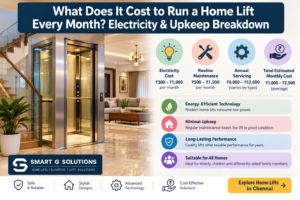
Installing a home lift is becoming a practical choice for homeowners who want easier access between floors, improved convenience, and better long-term accessibility. But while considering installation, one question often comes up: what does it actually cost to run a home lift every month?

The overall running cost is not limited to electricity. Homeowners should also consider regular maintenance, annual servicing, spare parts, and occasional repairs. Understanding these expenses beforehand makes it easier to plan a realistic budget.

For people researching home lifts chennai, the important point is to look at the total cost of ownership rather than focusing only on the initial installation price.

How Much Electricity Does a Home Lift Use? ⚡

A home lift does not consume electricity continuously like an air conditioner or refrigerator. Power is mainly required when the lift is moving, while some models may use a small amount of standby electricity for controls, lighting, displays, and safety systems.

The actual electricity consumption depends on several factors:

  • Number of trips per day
  • Number of floors
  • Lift capacity
  • Motor technology
  • Travel distance
  • Standby power consumption
  • Local electricity tariff

A small residential lift used by a family a few times each day may have a relatively manageable electricity expense. However, a larger household with frequent trips between multiple floors will naturally consume more power.

Therefore, homeowners should ask the manufacturer for an estimated monthly electricity consumption based on their expected usage instead of relying on a general figure.

What About Home Lift Maintenance? 🔧

Electricity is only one part of the running cost. Regular maintenance is equally important.

A home lift contains electrical, mechanical, safety, and control components. Periodic inspection helps identify issues before they become major problems.

Maintenance may include checking:

  • Lift doors and door sensors
  • Motor and drive system
  • Control panel
  • Safety mechanisms
  • Cables or other lifting components
  • Cabin operation
  • Emergency systems
  • Electrical connections

The cost depends on the lift model, service agreement, technology, and maintenance provider.

Some manufacturers offer annual maintenance contracts, while others provide different service packages depending on the requirements of the homeowner.

When comparing home lifts in Chennai, it is therefore useful to ask for both the installation quotation and the expected annual maintenance cost.

Annual Servicing and Repairs 📅

Even when a lift is properly maintained, some components may eventually require replacement.

Wear and tear can affect parts such as door components, sensors, switches, electrical components, and other mechanical systems. The replacement cost depends on the specific component and lift design.

This is why homeowners should not calculate their budget based only on monthly electricity consumption.

A better approach is to create an annual ownership budget that includes:

Electricity + routine maintenance + annual servicing + potential repairs

For example, if annual maintenance costs ₹6,000, the maintenance component alone averages ₹500 per month when spread across the year. Electricity would then be added according to actual household usage.

These are planning examples rather than fixed industry prices because every installation is different.

Does Frequent Usage Increase the Running Cost? 🏠

Yes. More frequent usage can increase electricity consumption and the number of operating cycles for components such as doors and mechanical systems.

However, homeowners should not avoid using their lift simply to reduce electricity expenses. A residential lift is installed to provide convenience and accessibility.

The better strategy is to select a lift that matches the household’s actual requirements.

For example, a four-member family living in a two- or three-storey home may have different requirements from a large family using the lift throughout the day.

Correct sizing can help avoid unnecessary capacity and ensure that the system is suitable for the intended application.

How Can You Reduce Home Lift Running Costs? 💡

There are several practical ways to keep long-term expenses under control.

1. Select the Right Lift Capacity

Choose a lift according to the number of users and expected load. Overspecifying a system may increase the initial investment without providing a meaningful benefit.

2. Compare Energy Consumption

Ask suppliers for estimated electricity consumption and standby power requirements. Different technologies can have different operating characteristics.

3. Follow the Maintenance Schedule

Skipping routine maintenance may save money temporarily but can increase the risk of unexpected breakdowns and expensive repairs.

4. Check the Warranty

Understand exactly what is covered under the manufacturer’s warranty and for how long.

5. Compare Annual Maintenance Contracts

Before purchasing, ask whether preventive maintenance, labour, emergency visits, and spare parts are included in the service package.

6. Use a Reliable Service Provider

Good after-sales support can make a significant difference to the long-term ownership experience.

What Should You Ask Before Buying a Home Lift? 🤔

Before making a purchase, homeowners should request clear answers to the following questions:

  • What is the estimated electricity consumption?
  • How much does annual maintenance cost?
  • What does the warranty cover?
  • How often should the lift be serviced?
  • What happens during a power failure?
  • What safety systems are included?
  • Are emergency service visits available?
  • How much do commonly replaced spare parts cost?
  • What civil or structural work is required?
  • What is the expected service life of the system?

Getting these details in writing makes it easier to compare different options objectively.

Is a Home Lift Expensive to Run? 💰

A home lift should not be evaluated based solely on its electricity bill. For most homeowners, the complete running cost consists of several smaller expenses spread across the year.

Electricity consumption depends heavily on usage, while maintenance and servicing depend on the equipment and service agreement.

For homeowners exploring home lifts in Chennai, comparing the complete lifecycle cost can provide a much clearer picture than comparing installation prices alone.

A reliable residential lift should combine appropriate capacity, safety features, efficient operation, regular maintenance, and dependable after-sales support.

Final Thoughts

The monthly cost of operating a home lift depends on the specific installation and how frequently it is used. Electricity is one component, but maintenance, servicing, repairs, and replacement parts should also be included when calculating the long-term budget.

The smartest approach is to ask the lift provider for a complete cost estimate covering installation, electricity expectations, maintenance, warranty, servicing, and potential replacement costs.

If you are planning a residential lift installation, Smart G Solutions can be explored for home lift solutions and professional guidance based on your home’s requirements.

Choose the right system, maintain it regularly, and consider the total ownership cost—not just the purchase price—when planning your home lift in Chennai.

Frequently Asked Questions

1. How much electricity does a home lift consume every month?

Electricity consumption varies depending on the lift model, motor, number of floors, travel distance, standby consumption, and frequency of use. The manufacturer can provide an estimated consumption based on your expected usage.

2. How often does a home lift need maintenance?

The recommended maintenance schedule depends on the lift model and manufacturer. Regular inspections and servicing help maintain safe and reliable operation.

3. What is the biggest ongoing expense of a home lift?

There is no single fixed expense. Electricity, routine maintenance, annual servicing, and occasional component replacement can all contribute to the total ownership cost.

Read More

Transforming Your Home with Affordable Elevators

As technology advances, the concept of luxury and convenience in homes is evolving. Home elevators, once a symbol of opulence, are now accessible and affordable for a wide range of homeowners. Whether you’re considering a small lift for your home or exploring more robust options like a hydraulic lift, the market offers a variety of solutions tailored to your needs.

The Rise of Home Elevators

Home elevators have grown in popularity due to their practical benefits and enhanced aesthetic appeal. Beyond the obvious convenience, these lifts add significant value to your property, making them a wise investment. Companies like TKE Elevator are leading the charge in creating modern, sleek designs that integrate seamlessly into any home décor.

Understanding the Cost

One of the most common concerns for homeowners is the cost of installing a home elevator. The price can vary based on several factors, including the type of lift, the size, and the installation process. For instance, a small elevator for a home might cost less than a more complex hydraulic lift. On average, you can expect residential elevator costs to range from $15,000 to $50,000. However, it’s important to remember that the long-term benefits and added home value often justify the initial expense.

Choosing the Right Elevator for Your Home

When selecting a home elevator, consider your specific needs and budget. For smaller homes, a compact lift might be the best option. These lifts are designed to fit into tight spaces without sacrificing functionality. If you’re looking for something more robust, a hydraulic lift provides a smooth and reliable experience, capable of supporting more weight and offering longer service life.

Why Invest in a Home Elevator?

Investing in a home elevator is about more than just convenience; it’s about future-proofing your home. As we age, mobility can become a challenge, and having a domestic lift can make a world of difference. Additionally, home elevators are becoming increasingly affordable, making them an attractive option for homeowners of all ages.

Final Thoughts

Home elevators are no longer just for the wealthy. With advancements in technology and competitive pricing from elevator companies, you can now enjoy the benefits of a home lift without breaking the bank. Whether you’re looking at the cost of a house elevator or exploring different types of lifts for houses, there’s an option out there for every budget and need.

Read More

Elevate Your Lifestyle with a Residential Elevator

In the past, elevators were mostly found in commercial buildings and luxury homes. However, the demand for residential elevators is on the rise, as more homeowners recognize their value. From small lifts for homes to hydraulic systems, the variety of options available today ensures there’s a solution for every household.

The Evolution of Home Lifts

The concept of home elevators has evolved significantly over the years. No longer just a luxury, these lifts are becoming essential for modern homes, offering convenience, safety, and increased property value. Companies like TKE Elevator are pioneering innovations that make home elevators more accessible and stylish than ever before.

Breaking Down the Costs

Understanding the cost of a home elevator is crucial before making a decision. While the price can vary depending on the type and size of the lift, most homeowners find that the investment pays off in the long run. A small lift for a home might cost around $20,000, while a more sophisticated hydraulic lift could reach $50,000. Regardless of the initial investment, the long-term benefits in terms of convenience and increased home value are significant.

Types of Home Elevators

When considering a home elevator, you’ll need to choose between different types, such as hydraulic lifts, pneumatic elevators, or electric lifts. Each type has its advantages, with hydraulic lifts being particularly popular due to their reliability and smooth operation. These lifts can be installed in both new builds and existing homes, making them a versatile option for any homeowner.
Why Choose a Home Elevator?

A home elevator offers unparalleled convenience, especially for multi-story homes. Whether you’re carrying groceries, moving furniture, or simply looking for an easier way to navigate your home, a domestic lift can make daily tasks simpler. Additionally, home lifts are a great way to future-proof your home, ensuring it remains accessible as you age.

Making the Right Choice

When selecting a home elevator, it’s important to work with a reputable company that understands your needs. Companies like TKE Elevator offer a range of customizable options, ensuring you get a lift that fits both your home and lifestyle.

Conclusion

Residential elevators are a smart investment for anyone looking to enhance their home’s functionality and value. Whether you’re interested in a small elevator for your home or a more advanced hydraulic system, there’s a solution to fit every need and budget. With the right lift, you can elevate not just your home, but your entire lifestyle.

Read More

The Future of Home Living: Affordable Domestic Lifts

As the trend toward smart and accessible homes continues to grow, more homeowners are turning to domestic lifts to improve their living experience. From small elevators for homes to full-scale hydraulic systems, the options are vast and increasingly affordable.

Why Consider a Home Elevator?

Home elevators are no longer just about luxury—they’re about practicality. Whether you’re planning for the future or simply looking for ways to enhance your home’s accessibility, a lift can make a significant difference. Companies like TKE Elevator are at the forefront of this industry, offering innovative solutions that are both functional and stylish.

Cost Considerations

One of the first questions homeowners ask is, “How much does a home elevator cost?” The answer varies depending on the type of lift you choose. A small lift for home use might be relatively inexpensive, ranging from $15,000 to $30,000. On the other hand, more sophisticated systems, such as hydraulic lifts, can cost upwards of $50,000. It’s essential to weigh the benefits against the costs, as the long-term convenience and increased property value often justify the investment.

Types of Lifts for Homes

There are several types of home elevators to consider, each with its unique benefits. Hydraulic lifts, for example, are known for their smooth and quiet operation, making them a popular choice for many homeowners. For those with limited space, a compact or small lift might be the best solution, providing all the benefits of a larger system without taking up too much room.

The Installation Process

Installing a home elevator is a significant project, but with the right company, it can be a smooth and stress-free experience. Most elevator companies, like TKE Elevator, offer comprehensive installation services that include everything from initial consultation to final setup. This ensures that your lift is installed safely and operates efficiently.

Long-Term Benefits

Investing in a home elevator is not just about convenience today; it’s about planning for the future. As we age, mobility can become a challenge, and having a lift in your home can make a significant difference in your quality of life. Additionally, home elevators are becoming more affordable, making them accessible to a broader range of homeowners.

Final Thoughts

Domestic lifts are transforming the way we think about home living. No longer just a luxury, they offer practical benefits that enhance both the functionality and value of your home. Whether you’re interested in a small lift for home use or a more advanced hydraulic system, there’s a solution out there that fits your needs and budget.

Read More
